QA Intelligence, Built In
QA Intelligence.
Built In
Stop juggling multiple disconnected tools, manual spreadsheets and cumbersome processes. TestChimp gives each stakeholder of your team the QA intel that matters.
Stop juggling multiple disconnected tools, manual spreadsheets and cumbersome processes. TestChimp gives each stakeholder of your team the QA intel that matters.
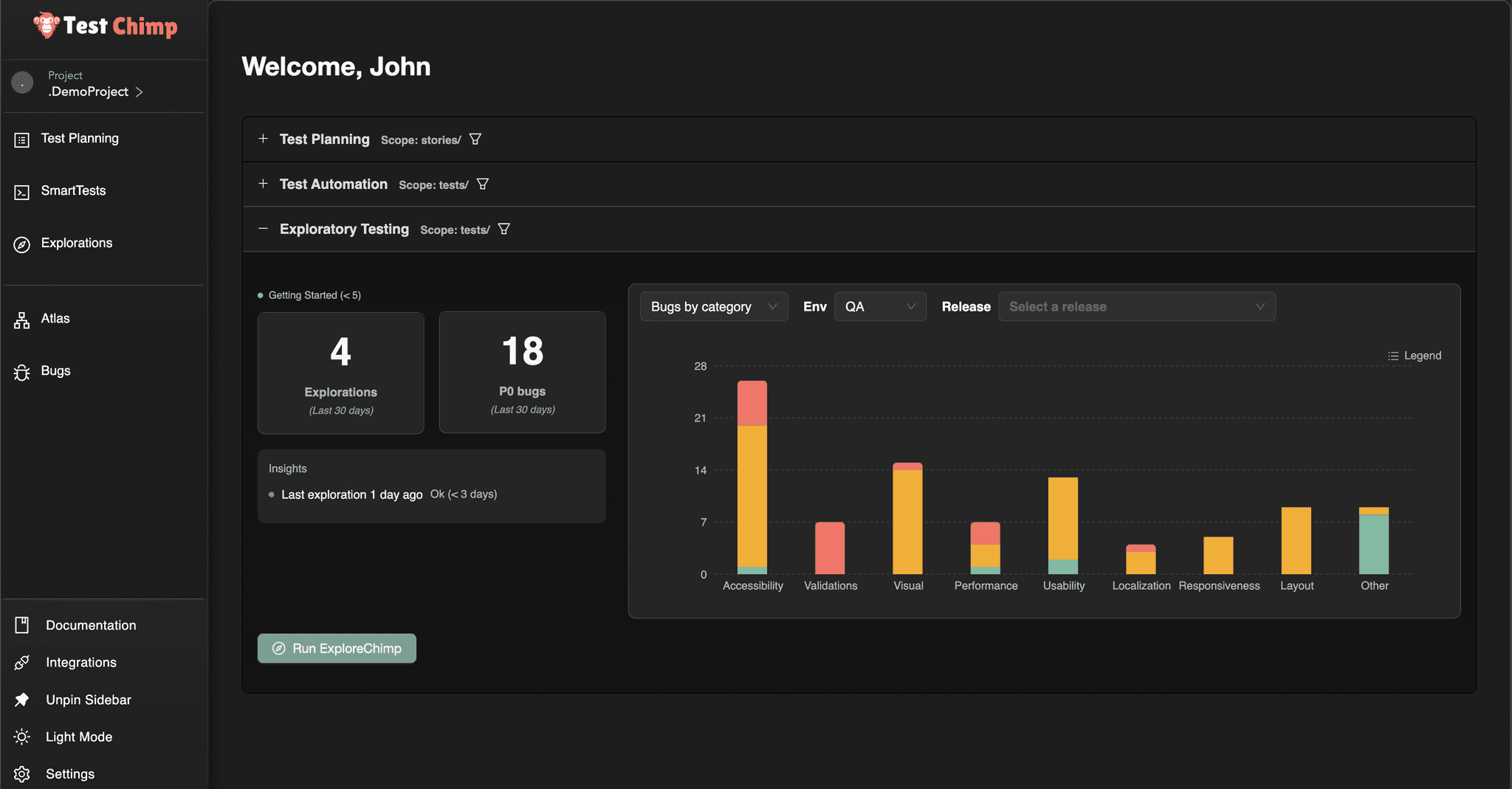
From Plans → Tests → Executions → Explorations.
From Plans → Tests → Executions → Explorations.
TestChimp unifies planning, functional tests, execution history and agentic explorations into a single system - with end-to-end traceability built directly into your code.
TestChimp unifies planning, functional tests, execution history and agentic explorations into a single system - with end-to-end traceability built directly into your code.
Every test is traceable back to its test plan
Execution data across releases becomes structured insight
Agentic exploratory runs feed directly into your measurable coverage
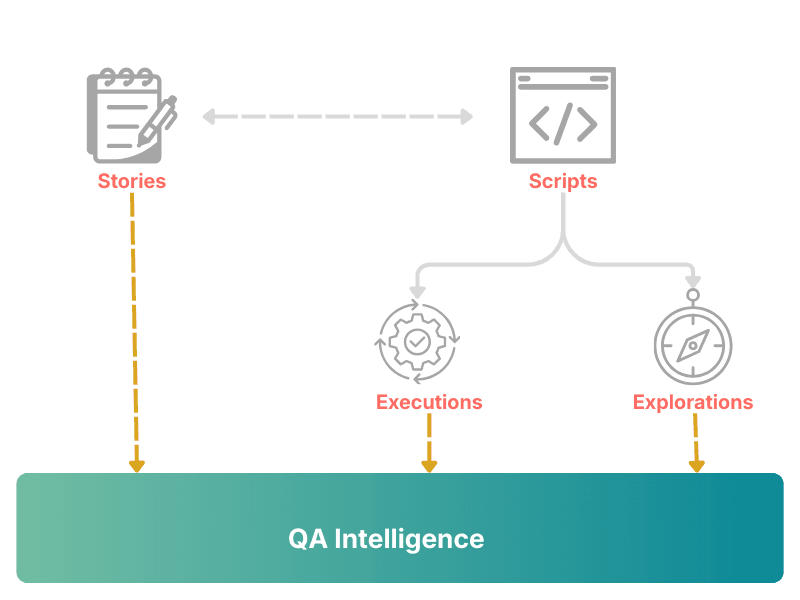
Traceability - Built for the Agentic Era.
Traceability - Built for the Agentic Era.
Spreadsheets go stale. External systems drift. Manual processes get forgotten.
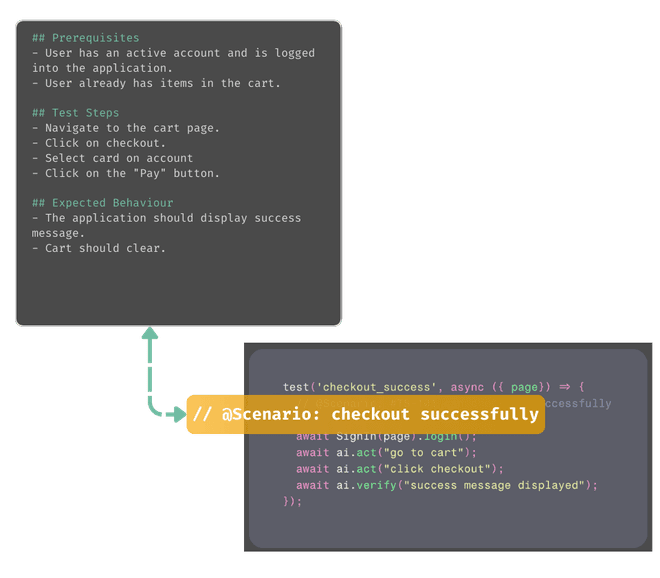
In TestChimp, tests are linked to scenarios directly in code - with a simple comment.
Agent Friendly
Tests evolve with Plans
Refacor Resilient
Refactor Resilient
Coverage gaps - aligned to your plans
Did your AI agent implement what you intended? Test coverage aligned with your plans answers exactly that for you - so you can deploy AI built software confidently, blindspots identified, and risks transparent.
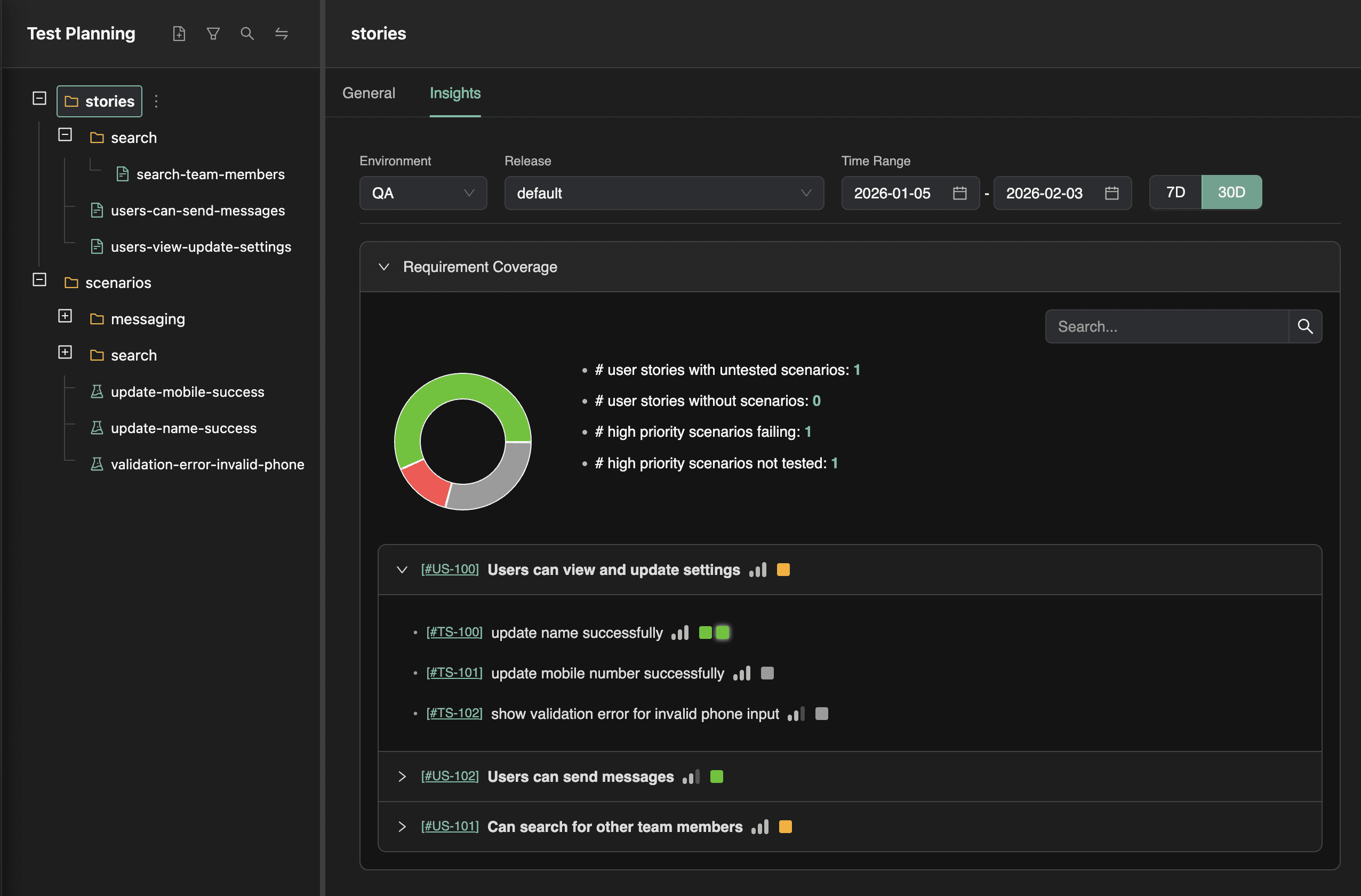
Drill down to any level
Stories and scenarios are organized in folders, enabling insights to be aggregated at any scope - aligned with your team and scaling with your product.
Stories and scenarios are organized in folders, enabling insights to be aggregated at any scope - aligned with your team and scaling with your product.
Stories and scenarios are organized in folders, enabling insights to be aggregated at any scope - aligned with your team and scaling with your product.
stories
auth
purchase flows
pay-with-credit
add-to-cart
scenarios
happy path
payment-success
Bugs aligned with App Structure
View bugs reported by exploratory agents, grouped by the screens and states they were found at. Aligning with typical team structures and workstreams.
View bugs reported by exploratory agents, grouped by the screens and states they were found at. Aligning with typical team structures and workstreams.
View bugs reported by exploratory agents, grouped by the screens and states they were found at. Aligning with typical team structures and workstreams.
App
Login Screen
Fields empty
Valid Creds Entered
Dashboard
Filters Applied
Search with Date Range
Settings Page
App
Login Screen
Fields empty
Valid Creds Entered
Dashboard
Filters Applied
Search with Date Range
Settings Page
App
Login Screen
Fields empty
Valid Creds Entered
Dashboard
Filters Applied
Search with Date Range
Settings Page
Translate Bugs Found to Business Impact
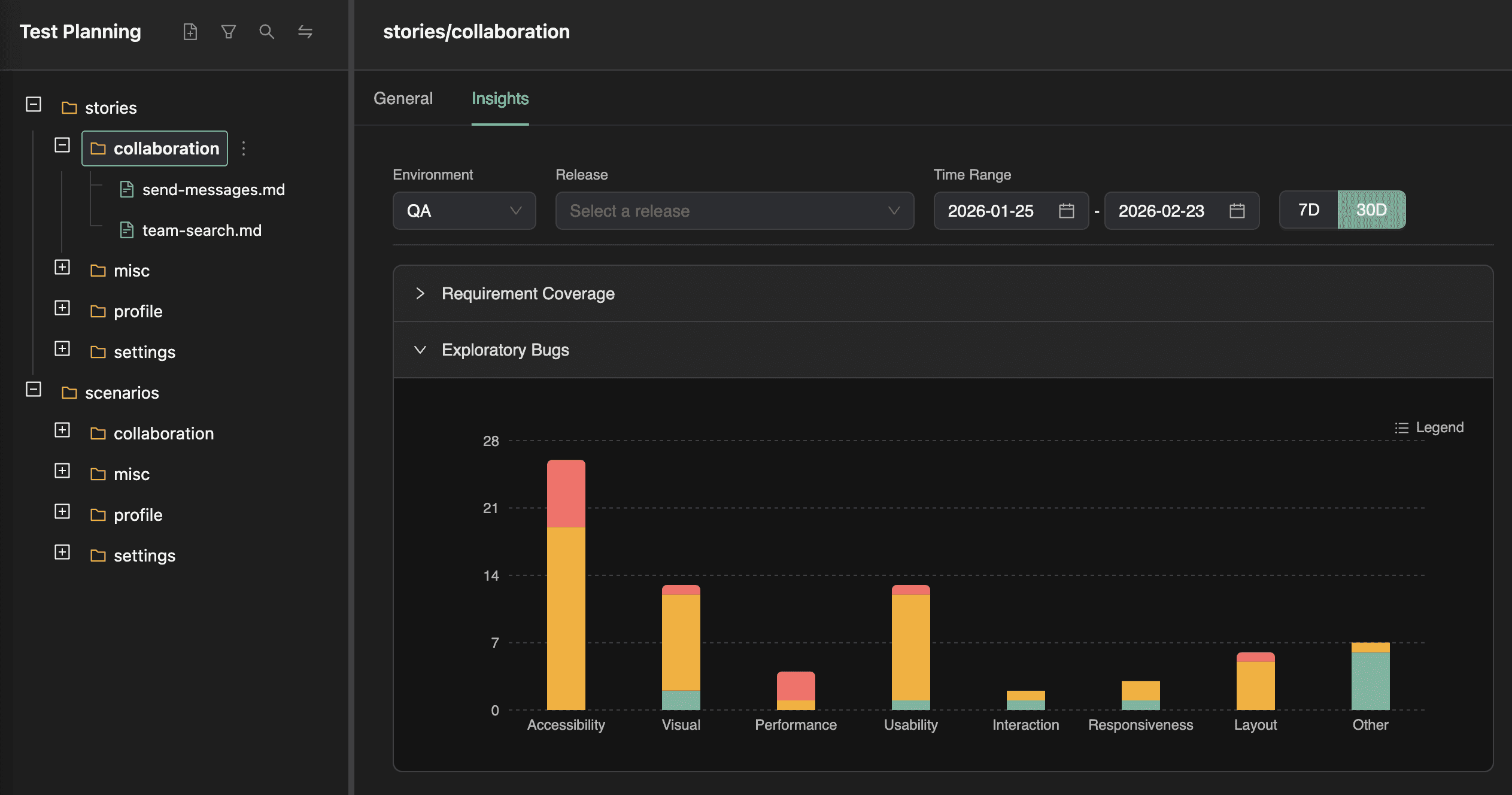
🔶 What’s slowing down your checkout flow?
🔶 Are localization gaps hurting onboarding?
Most QA setups can’t answer what the business actually cares about.
TestChimp’s exploratory agents are guided by tests - that's already linked to scenarios, enabling exploratory findings to be traced back to stories, rolled up to folders - to provide business critical answers.
🔶 What’s slowing down your checkout flow?
🔶 Are localization gaps hurting onboarding?
Most QA setups can’t answer what the business actually cares about.
TestChimp’s exploratory agents are guided by tests - that's already linked to scenarios, enabling exploratory findings to be traced back to stories, rolled up to folders - to provide business critical answers.
Frequently Asked Questions
How does this compare with tools like TestRail / PractiTest?
Tools like TestRail / PractiTest rely on spreadsheets and integrations with systems like Jira, leaving plans, code, and execution data disconnected. TestChimp unifies planning, executions, exploratory findings, aligned with app structure and intent in one system.
What does “QA Intelligence” actually mean?
QA Intelligence means connecting plans, test code, executions, UX defects, and app structure so quality signals are traceable across releases - aligned with app structure and user intent - resulting in actionable insights.
How do you consolidate test executions with test plans?
Tests reference scenarios through code comments, allowing failures and regressions to map directly to planned intent and roll up across folders, features, and releases.
How does TestChimp enable UX bug traceability?
ExploreChimp captures visual, performance, layout, and usability defects and aligns them to both scenarios and application screens or states through Atlas, connecting UX issues with functional coverage.
How does TestChimp enable granular insights?
Because stories and scenarios are managed as files in folders, QA insights can be viewed rolled up at any folder level, giving each stakeholder of your team the right actionable insights.
Who benefits most from QA Intelligence?
QA and engineering leaders running human-AI workflows benefit most, as QA Intelligence provides feature-level and release-level visibility into validation coverage and emerging UX or functional risk.
Frequently Asked Questions
How does this compare with tools like TestRail / PractiTest?
Tools like TestRail / PractiTest rely on spreadsheets and integrations with systems like Jira, leaving plans, code, and execution data disconnected. TestChimp unifies planning, executions, exploratory findings, aligned with app structure and intent in one system.
What does “QA Intelligence” actually mean?
QA Intelligence means connecting plans, test code, executions, UX defects, and app structure so quality signals are traceable across releases - aligned with app structure and user intent - resulting in actionable insights.
How do you consolidate test executions with test plans?
Tests reference scenarios through code comments, allowing failures and regressions to map directly to planned intent and roll up across folders, features, and releases.
How does TestChimp enable UX bug traceability?
ExploreChimp captures visual, performance, layout, and usability defects and aligns them to both scenarios and application screens or states through Atlas, connecting UX issues with functional coverage.
How does TestChimp enable granular insights?
Because stories and scenarios are managed as files in folders, QA insights can be viewed rolled up at any folder level, giving each stakeholder of your team the right actionable insights.
Who benefits most from QA Intelligence?
QA and engineering leaders running human-AI workflows benefit most, as QA Intelligence provides feature-level and release-level visibility into validation coverage and emerging UX or functional risk.
Upgrade Your QA Platform Today.
Products
Compare with
Products
Compare with
Get In Touch
Email:
contact@testchimp.io
Phone:
+61 434 336 795

TestChimp
Context-Driven QA for Agentic Teams
Products
Compare with