TrueCoverage. QA Informed by Real User Behaviour
TrueCoverage. QA Informed by Real User Behaviour
Stop testing blindly. Analyze events from real user sessions and compare against test runs to identify untested behaviours. Drive QA strategy informed by event metrics for higher ROI.
Stop testing blindly. Analyze events from real user sessions and compare against test runs to identify untested behaviours. Drive QA strategy informed by event metrics for higher ROI.

The "4D"s of User Behaviour Based QA
The "4D"s of User Behaviour Based QA
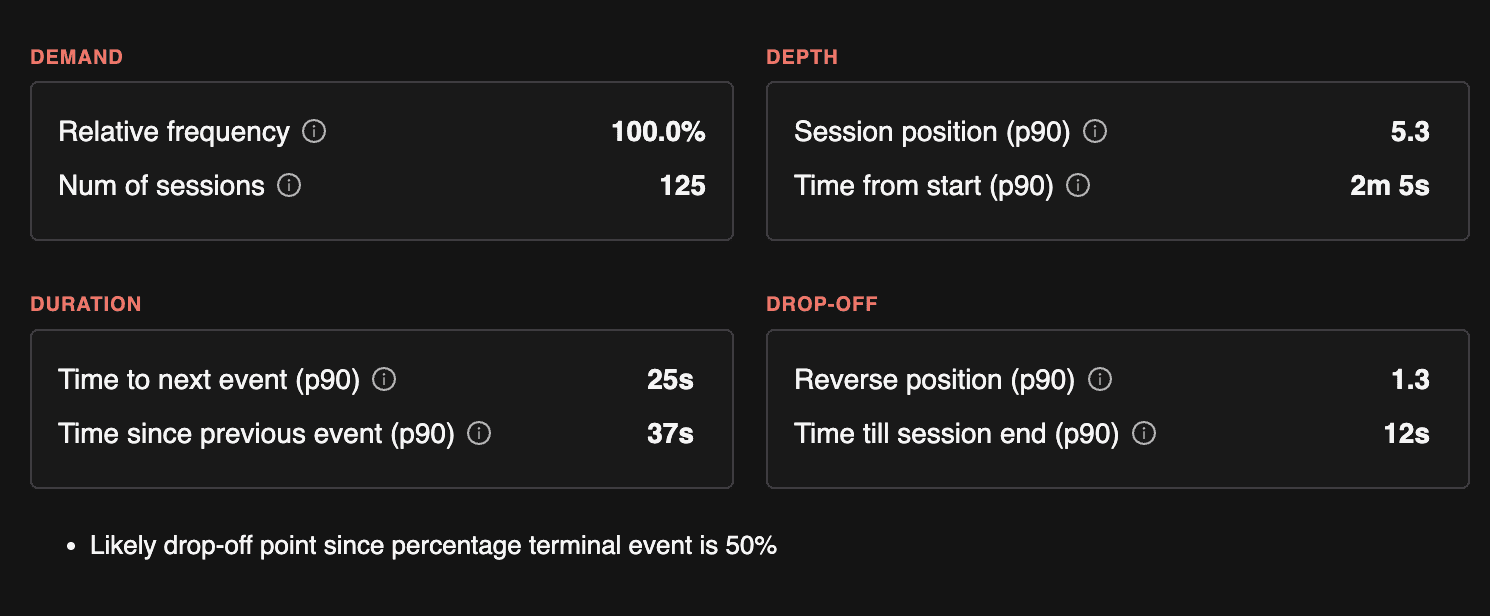
TestChimp analyzes production event data and derives signals across 4 key categories per event type - to prioritize QA work effectively
DEMAND
DEMAND
DEMAND
How frequently an interaction occurs
How frequently an interaction occurs
How frequently an interaction occurs
High-demand events represent the most commonly used parts of your product.
Covering these in regression tests ensures that the features users rely on most are consistently validated.
High-demand events represent the most commonly used parts of your product.
Covering these in regression tests ensures that the features users rely on most are consistently validated.
DEPTH
DEPTH
DEPTH
Where an interaction occurs in typical sessions
Where an interaction occurs in typical sessions
Where an interaction occurs in typical sessions
Depth reveals whether an event occurs early in the user journey or deeper within a workflow
Covering top-of-funnel events have outsized gains for activation and user satisfaction
Depth reveals whether an event occurs early in the user journey or deeper within a workflow
Covering top-of-funnel events have outsized gains for activation and user satisfaction
DURATION
DURATION
DURATION
How long users spend interacting with a feature
How long users spend interacting with a feature
How long users spend interacting with a feature
Duration highlights the parts of your product where users spend the most time.
Longer interaction times can indicate complex functionality, requiring thorough testing of variations and edge cases
Duration highlights the parts of your product where users spend the most time.
Longer interaction times can indicate complex functionality, requiring thorough testing of variations and edge cases
DROP-OFF
DROP-OFF
DROP-OFF
Where users abandon journeys.
Where users abandon journeys.
Where users abandon journeys.
These deserve close attention during testing, as drop-offs can signal untested variations, and usability bugs
Testing around these areas can help move user retention, and reduce churn rates
These deserve close attention during testing, as drop-offs can signal untested variations, and usability bugs
Testing around these areas can help move user retention, and reduce churn rates
View behaviour funnels with Coverage
View behaviour funnels with Coverage
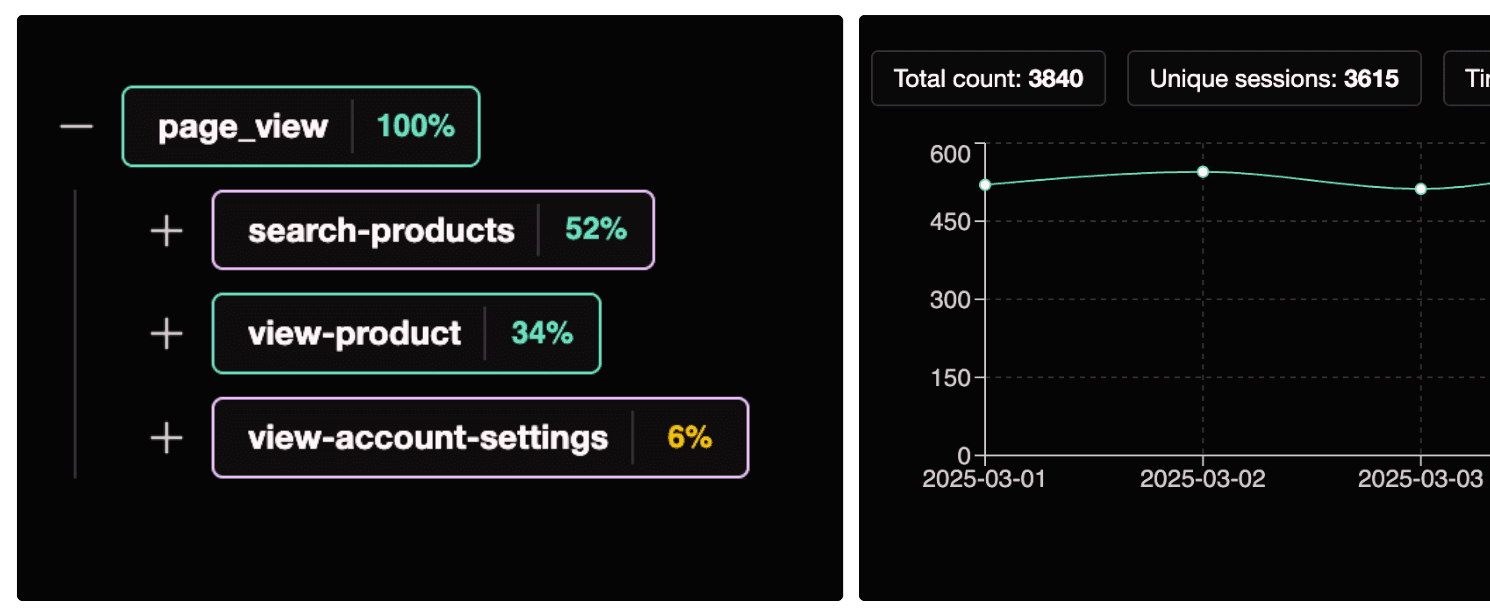
visualize real user behaviour as event funnels, overlaid with test coverage information. Understand how users move through the product and where tests provide protection
Identify high-frequency interactions that deserve strong regression coverage
Spot top-of-funnel events that influence activation and gates the rest of your app.
Spot top-of-funnel events that influence activation and gates the rest of your app.

Drill down to events…
Drill down to events…
Drill down to events…
Dig deeper in to individual event types to explore deeper behavioural insights and testing gaps - such as which variations are untested, what do users do after an event and more…
Catch Untested Variations
With Metadata Coverage
Catch Untested Variations
With Metadata Coverage
Catch Untested Variations
With Metadata Coverage
Events can include metadata for finer slicing. TrueCoverage analyzes these metadata values to reveal:
which variations occur frequently in production
which values are already covered by tests
which variations remain untested

Core Event Insights
🟣 Are users dropping off here?
🟣 Do users spend a long time here?
These signals help highlight interactions that deserve deeper investigation and stronger test coverage
🟣 Are users dropping off here?
🟣 Do users spend a long time here?
These signals help highlight interactions that deserve deeper investigation and stronger test coverage
Event Funnel Analytics
🟣 What do users do after this event
🟣 Which sequences are covered in tests
Understanding these transitions allows teams to design tests that reflect real user journeys, not just isolated actions.
🟣 What do users do after this event
🟣 Which sequences are covered in tests
Understanding these transitions allows teams to design tests that reflect real user journeys, not just isolated actions.
Translate Bugs Found to User Impact

🟣 What UX bugs are causing drop-offs in core journeys?
🟣 What performance bugs are slowing top-of-funnel features?
TestChimp’s exploratory agents are guided by tests - enabling correlating user events emitted with bugs found by agents. This allows identifying the bugs that translates to user friction, drop-off - resulting in high value corrective actions.
🟣 What UX bugs are causing drop-offs in core journeys?
🟣 What performance bugs are slowing top-of-funnel features?
TestChimp’s exploratory agents are guided by tests - enabling correlating user events emitted with bugs found by agents. This allows identifying the bugs that translates to user friction, drop-off - resulting in high value corrective actions.
Frequently Asked Questions
How is this different from product analytics tools like PostHog?
Tools like PostHog or Amplitude help product teams analyze behaviour for growth and product decisions. TrueCoverage focuses on QA signals, surfacing demand, drop-offs, and dwell points and tying them directly to test coverage and exploratory findings.
Why bring production usage data into testing?
Specifications rarely reflect how users actually use a product. TrueCoverage uses real usage data to highlight the interactions users depend on most, helping teams focus testing effort where it delivers the highest reliability and QA ROI.
How does TrueCoverage help identify gaps in test coverage?
TrueCoverage compares events observed in production with events generated during automated and exploratory test runs. This reveals frequently used interactions and flows that exist in production but are not exercised by tests.
How is behaviour insights connected back to testing
Behaviour insights are tied directly to testing artifacts — including tests that cover specific events, missing coverage areas, and exploratory findings discovered around those interactions.
Can TrueCoverage help detect UX issues that cause user friction?
Yes. Signals like high drop-off rates or long interaction durations often indicate friction in a workflow. TrueCoverage highlights these areas and connects them with exploratory test findings discovered around those interactions to correlate likely bugs causing user friction.
What types of applications benefit most from TrueCoverage?
TrueCoverage is especially valuable for SaaS products and workflow-driven applications where users move through multi-step journeys such as onboarding, checkout, configuration, or data workflows. Testing can then focus on protecting the paths users actually take.
Frequently Asked Questions
How is this different from product analytics tools like PostHog?
Tools like PostHog or Amplitude help product teams analyze behaviour for growth and product decisions. TrueCoverage focuses on QA signals, surfacing demand, drop-offs, and dwell points and tying them directly to test coverage and exploratory findings.
Why bring production usage data into testing?
Specifications rarely reflect how users actually use a product. TrueCoverage uses real usage data to highlight the interactions users depend on most, helping teams focus testing effort where it delivers the highest reliability and QA ROI.
How does TrueCoverage help identify gaps in test coverage?
TrueCoverage compares events observed in production with events generated during automated and exploratory test runs. This reveals frequently used interactions and flows that exist in production but are not exercised by tests.
How is behaviour insights correlated back to testing?
TrueCoverage tracks the same instrumented events in both production and test runs. During tests, events are emitted with test identity, allowing the system to correlate production behaviour with the tests that exercise those interactions — revealing which events, flows, or metadata variations are covered by tests and which remain untested.
Can TrueCoverage help detect UX issues that cause user friction?
Yes. Signals like high drop-off rates or long interaction durations often indicate friction in a workflow. TrueCoverage highlights these areas and connects them with exploratory test findings discovered around those interactions to correlate likely bugs causing user friction.
What types of applications benefit most from TrueCoverage?
TrueCoverage is especially valuable for SaaS products and workflow-driven applications where users move through multi-step journeys such as onboarding, checkout, configuration, or data workflows. Testing can then focus on protecting the paths users actually take.
Frequently Asked Questions
How does this compare with tools like PostHog?
Tools like PostHog or Amplitude help product teams analyze behaviour for growth and product decisions. TrueCoverage focuses on QA signals, surfacing demand, drop-offs, and dwell points and tying them directly to test coverage and exploratory findings.
Why bring production usage data into testing?
Specifications rarely reflect how users actually use a product. TrueCoverage uses real usage data to highlight the interactions users depend on most, helping teams focus testing effort where it delivers the highest reliability and QA ROI.
How are test executions aligned with test plans?
TrueCoverage compares events observed in production with events generated during automated and exploratory test runs. This reveals frequently used interactions and flows that exist in production but are not exercised by tests.
How is user behaviour correlated back to testing?
Behaviour insights are tied directly to testing artifacts — including tests that cover specific events, missing coverage areas, and exploratory findings discovered around those interactions.
this detect UX issues causing user friction?
Yes. Signals like high drop-off rates or long interaction durations often indicate friction in a workflow. TrueCoverage highlights these areas and connects them with exploratory test findings discovered around those interactions to correlate likely bugs causing user friction.
What types of applications benefit most from this?
TrueCoverage is especially valuable for SaaS products and workflow-driven applications where users move through multi-step journeys such as onboarding, checkout, configuration, or data workflows. Testing can then focus on protecting the paths users actually take.
Upgrade Your QA Platform Today.
Products
Compare with

TestChimp
Context-Driven QA for Agentic Teams
Products
Compare with
Products
Compare with
Get In Touch
Email:
contact@testchimp.io
Phone:
+61 434 336 795